ROULE is a FREE AI-Powered Platform for Fans, Riders, and Teams — bringing Women’s Professional Road Cycling to life through real data, rider insight, and post-race intelligence.
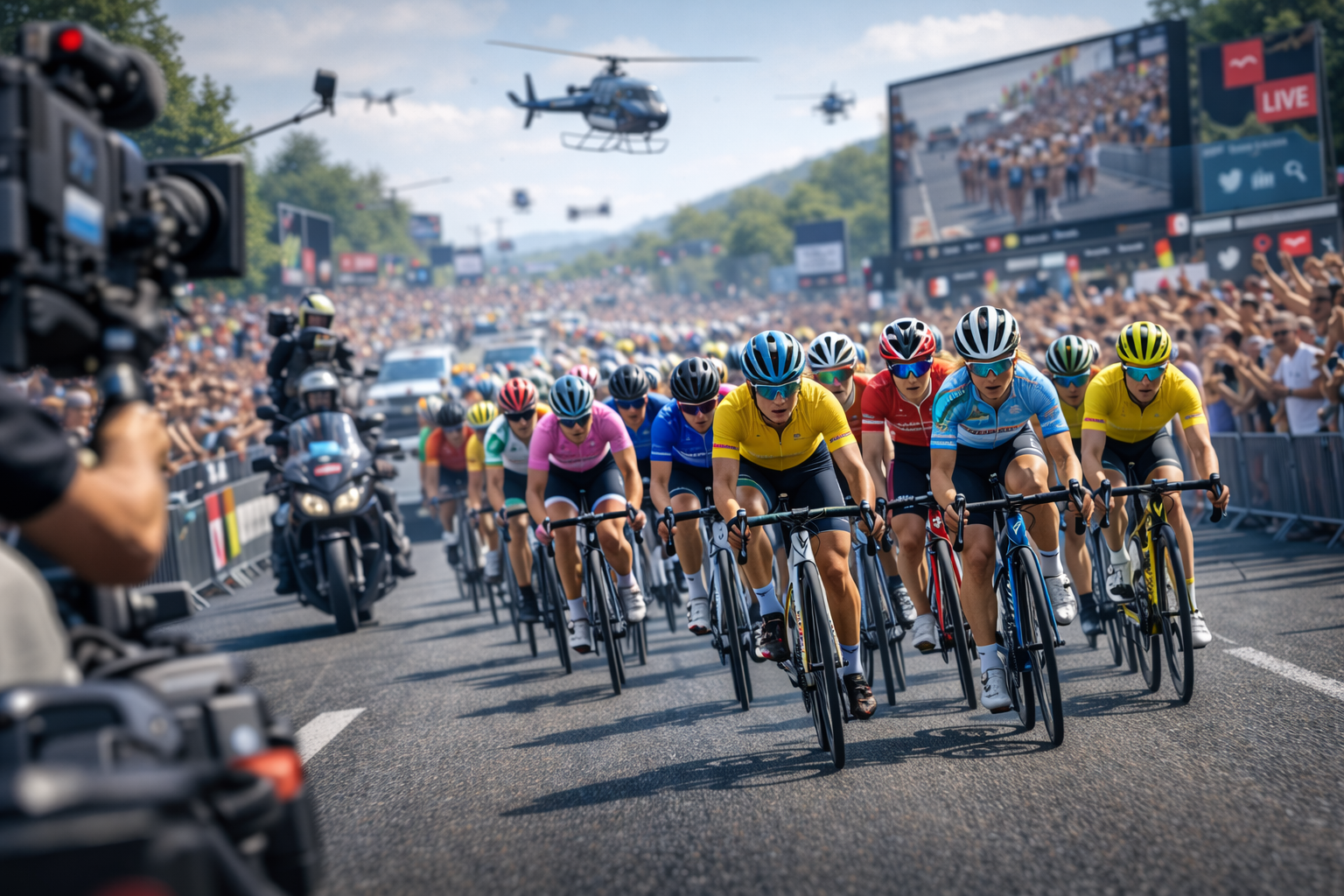

The rise of women’s pro cycling in recent years has reshaped the sport’s global profile. Since 2020, women’s racing has gained bigger audiences, stronger sponsorship, more professional team structures, and clearer “marquee” events that drive attention each season. Above all, the modern Tour de France Femmes has acted as a powerful growth engine. As a result, women’s cycling now looks and feels more elite, more visible, and more investable than at any point in the modern era.
Quick Facts: Why Women’s Pro Cycling Has Grown Fast
• A modern flagship event now anchors the season and drives global attention
• Broadcast coverage has expanded, making races easier to follow and share
• Sponsorship has become longer-term and more strategic
• Minimum salary frameworks and team standards have raised professionalism at the top
• Race depth has increased, so outcomes feel less predictable and more compelling
• However, pay gaps, safety concerns, and lower-tier sustainability remain major issues
What Changed Since 2020
Women’s cycling did not grow because of one trend. Instead, several forces aligned at the same time.
First, the sport gained a reliable top-tier stage race that mainstream audiences could recognise instantly. Next, improved coverage made it easier for fans to follow the story across a week, not just a highlights clip. Then, sponsors saw clearer value because the audience became measurable and repeatable. Meanwhile, teams professionalised further, so performance levels rose quickly. Consequently, the product improved and the audience grew again.
The Tour de France Femmes Effect
The modern Tour de France Femmes has become a yearly “attention magnet” for women’s cycling.
A predictable tentpole event
A sport grows faster when it has one anchor moment that arrives every year, at the same time, with the same global recognition. The Tour de France name provides that. Therefore, broadcasters can plan for it, sponsors can activate around it, and teams can build seasons with it as a clear peak.
Better storytelling and clearer stakes
The race format also helps. It delivers sprint stages, rolling ambush terrain, and decisive climbs. As a result, different rider types get real opportunities. At the same time, general classification battles create a narrative that pulls casual viewers into day-to-day viewing.
Spillover into the wider calendar
Once fans learn the riders, they tend to keep watching. After all, a star built in July does not disappear in August. Therefore, interest spills into other stage races and key classics, which improves the whole calendar’s health.
Broadcast Growth: From Hard-To-Find to Habit-Forming
Media growth is not only about “more viewers.” It is also about how viewers behave.
First, modern coverage has become more consistent, which helps fans build habits. Next, highlight packages and short clips spread quickly on social platforms, which pulls in new viewers. Meanwhile, live coverage improves sponsor value because brands can measure exposure and audience demographics more clearly.
However, access is still uneven in some regions. Rights can be fragmented, and fans can still struggle to find every race in one place. Even so, overall visibility has improved sharply compared with the pre-2020 era.
Sponsorship Has Matured
Women’s cycling used to rely heavily on short-term support, one-off campaigns, and fragile team budgets. In recent years, sponsorship has become more strategic.
From logo placement to platform investment
Sponsors increasingly treat women’s cycling as a growth platform. They invest in storytelling, community, and long-term audience building. As a result, races and teams can plan further ahead.
Better sponsor fit and better activation
Brands now activate around themes like performance, empowerment, and participation. Meanwhile, teams and organisers have improved how they package assets, which makes sponsorship easier to justify internally. Consequently, deals last longer and feel less experimental.
Professionalisation: Salaries, Structures, and Standards
A key driver of growth is the slow shift from semi-pro realities toward full professional careers, especially at the top tier.
Minimum salary frameworks and clearer pathways
Minimum salary rules and more formal team standards have helped many riders train full-time. Therefore, performance levels have risen. In addition, clearer team tiers help define progression from development level to top level.
Better support staff and performance environments
Top teams now invest more in coaching, nutrition, biomechanics, training camps, and race logistics. As a result, the sport has become faster and more tactical. Moreover, the gap between “best prepared” and “poorly prepared” teams has narrowed at the WorldTour end.
The uncomfortable truth: inequality still exists
Even with progress, the sport still shows a major split between the top and the bottom. Some riders in lower tiers still earn very little, and some still rely on second jobs. Therefore, the pipeline remains fragile, and talent can still drop out before it reaches the top.
Competition Has Become Deeper and More Unpredictable
One of the clearest on-road signs of growth is depth.
First, more riders arrive at races with strong preparation, not just a small group of stars. Next, teams bring better tactical discipline, so breakaways succeed through teamwork, not luck. Then, climbs and time gaps often show multiple contenders, not a single dominant rider. Consequently, the racing feels more open and more compelling.
This depth matters because it improves the viewing product. It also helps sponsorship, because a sport with credible competition feels more valuable.
Calendar Evolution: More Coherent, More Competitive
Women’s racing has expanded. At the same time, organisers have tried to reduce clashes and build stronger narrative flow.
Calendar decisions now increasingly aim to:
• improve media focus for key events
• reduce overlap between major stage races
• create clearer peaks for teams and riders
• protect recovery time so performance stays high
However, growth brings pressure. Teams must balance more racing, more travel, and higher expectations. Therefore, roster depth and staffing become even more important.
The Biggest Challenges Still Holding the Sport Back
Women’s pro cycling has grown fast, but it still faces serious constraints.
Prize money and economic gaps
Even when audiences rise, prize money and budgets do not always rise at the same rate. This slows progress, especially outside the top tier. Therefore, the sport needs stronger commercial distribution across more events and more teams.
Safety and race conditions
Riders and teams frequently highlight safety as a core concern. Faster racing, tighter roads, and larger calendars can increase risk if organisers do not invest in safety standards. Consequently, safety remains one of the most important “growth limiter” topics.
Pipeline sustainability
A healthy sport needs a strong middle. If lower-tier riders cannot afford to continue, the talent pool narrows. Therefore, the sport must keep building development structures, credible wages, and stable team funding at ProTeam and Continental levels.
What the Next Few Years Could Look Like
Women’s pro cycling now runs a clear growth flywheel.
First, marquee events pull in new viewers. Next, sponsors invest because the audience is real and measurable. Then, teams professionalise further, which raises race quality. Finally, higher quality produces stronger stories, which brings more viewers.
If that cycle continues, the sport will likely see:
• more consistent global coverage across the full calendar
• stronger minimum standards across more team tiers
• more stable team sponsorship lifecycles
• gradual expansion of stage-race ambition, where feasible
• deeper participation growth at grassroots level
Progress will not be perfectly linear. However, the direction is clear: women’s pro cycling is scaling into a modern, globally marketable sport.
Why the Rise of Women’s Pro Cycling Matters
This growth matters beyond sport headlines. It creates more professional opportunities for athletes, stronger role models for young riders, and a bigger audience for women’s elite competition. At the same time, it pushes organisers and sponsors to improve conditions, safety, and sustainability. In short, women’s cycling is not just “growing.” It is redefining what top-tier professional racing looks like.
Frequently Asked Questions
What caused the rise of women’s pro cycling in recent years?
The sport grew because it gained a stronger flagship event, better broadcast coverage, more strategic sponsorship, and more professional team standards. As a result, race quality improved and audiences expanded.
How has the Tour de France Femmes helped women’s cycling grow?
It created a major annual moment that draws global attention, improves storytelling, and introduces riders to a wider audience. Therefore, interest often spills into the rest of the season.
Are women’s cycling salaries improving?
Salaries and standards have improved at the top tier, especially with minimum salary frameworks. However, many lower-tier riders still face financial pressure, so inequality remains a key issue.
What challenges still limit women’s pro cycling growth?
The biggest challenges include prize money gaps, safety concerns, and pipeline sustainability. In addition, uneven broadcast access can still limit global habit formation.
Will women’s stage races keep expanding?
The sport is moving in that direction, but expansion depends on broadcast value, sponsorship stability, and logistics. Therefore, growth will likely be gradual and focused on sustainability.