ROULE is a FREE AI-Powered Platform for Fans, Riders, and Teams — bringing Women’s Professional Road Cycling to life through real data, rider insight, and post-race intelligence.

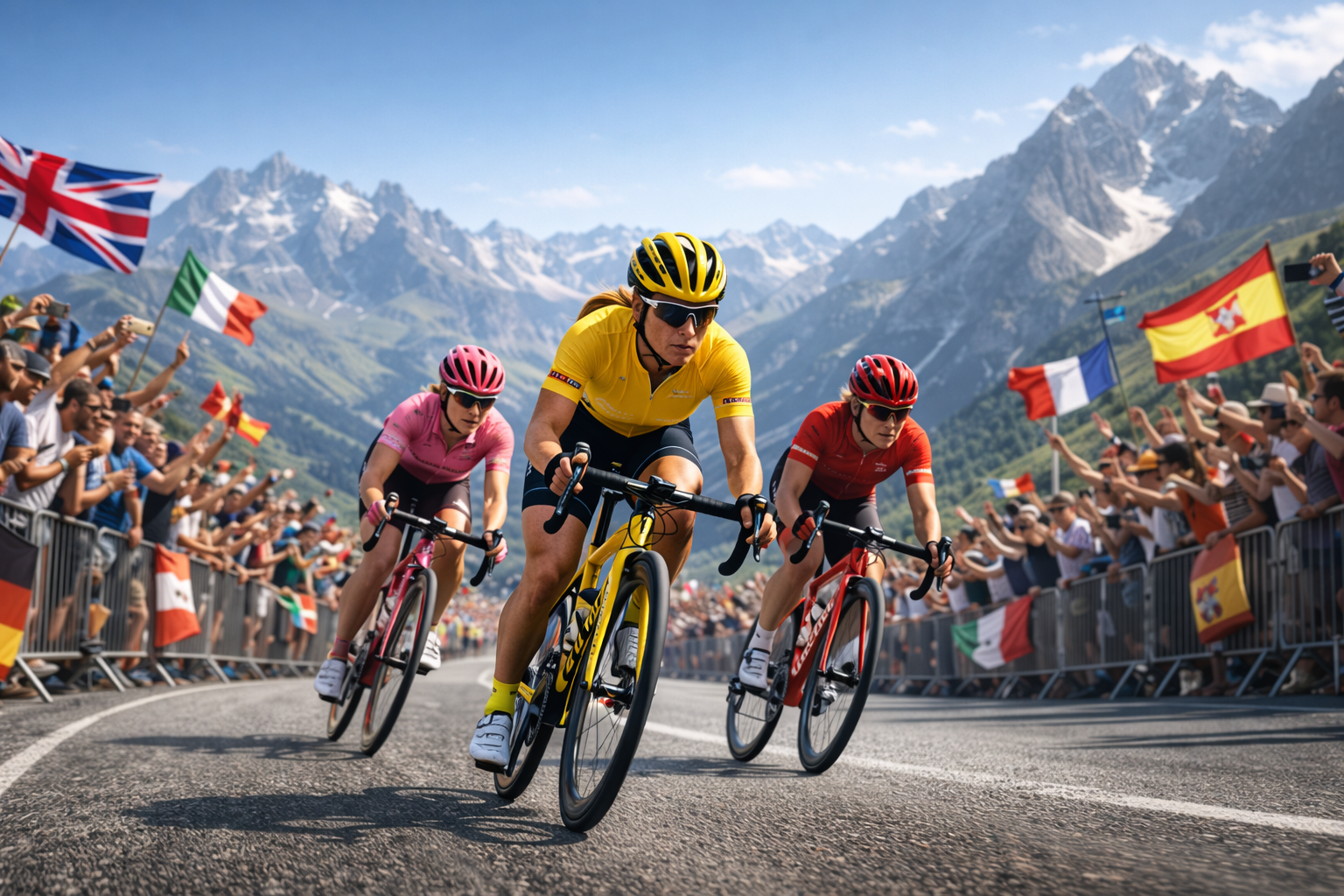

Grand Tour racing in women’s pro cycling defines the highest level of multi-day stage competition in the sport today. While men’s Grand Tours span three weeks, women’s elite stage races run over one week. However, they deliver the same tactical depth, physical demands, and global prestige. The Tour de France Femmes, Giro d’Italia Women, and La Vuelta Femenina now form the modern “Big Three” of women’s stage racing. Together, they represent the pinnacle of professional women’s cycling and the future path toward full Grand Tour parity.
Quick Facts: Women’s Grand Tour Racing
• Three major elite women’s stage races form the modern “Grand Tour” trio
• Tour de France Femmes, Giro d’Italia Women, and La Vuelta Femenina
• All are UCI Women’s WorldTour events
• Typical race length: 7 to 9 stages
• Global broadcast coverage and growing sponsorship
• Future expansion under active development
What Does “Grand Tour” Mean in Cycling?
In traditional cycling terms, a Grand Tour refers to a three-week race. This definition comes from the men’s calendar, which includes the Tour de France, Giro d’Italia, and Vuelta a España.
In women’s pro cycling, the term “Grand Tour” is used differently. Media, teams, and fans now apply it to the three most prestigious women’s stage races. Although these races last one week instead of three, they carry the same season-defining importance. Riders plan their careers around them. Teams build entire programs to win them. Sponsors invest heavily in them. As a result, they function as Grand Tours in every sporting sense.
The Three Major Women’s Stage Races
Tour de France Femmes avec Zwift
The Tour de France Femmes launched in 2022 and quickly became the most visible event in women’s cycling. It delivers global television coverage, packed roadside crowds, and the strongest start lists of the season.
Each edition includes flat sprint stages, hilly transitions, and decisive mountain finishes. General classification contenders battle across multiple terrain types, mirroring the structure of the men’s Tour. The upcoming 2027 UK Grand Départ signals growing commercial power and international ambition.
Giro d’Italia Women
The Giro d’Italia Women is the longest-running major women’s stage race. First held in 1988, it has carried many names over the decades. Today, it stands as a historic pillar of women’s cycling.
The race features tough mountain stages, time trials, and long endurance days. Recent calendar restructuring has moved the Giro to late spring from 2026 onward. This change improves visibility and reduces schedule clashes, strengthening its position in the women’s racing calendar.
La Vuelta Femenina
La Vuelta Femenina represents Spain’s top women’s stage race. It evolved from smaller events into a full Women’s WorldTour competition. Its modern identity has accelerated prestige, participation, and media interest.
The race regularly features steep climbs, aggressive racing, and unpredictable weather. It has become a core target for climbers and all-round stage racers.
Why Women’s Grand Tours Are One Week Long
Several practical factors shape current race length.
UCI regulations limit daily distance in women’s racing. This influences total race design. Team roster sizes are smaller than in men’s cycling, which affects workload management. Financial and logistical demands of three-week events remain high. Broadcast production, road closures, accommodation, and staffing costs scale rapidly with race length.
Importantly, athlete ability is not the limiting factor. Historical women’s races have already proven that longer formats are possible. The present strategy focuses on building audience, investment, and calendar stability first. Expansion can follow.
A History of Long-Form Women’s Stage Racing
Women’s multi-day racing has deep roots.
In the 1980s and 1990s, women’s Tour de France editions ran alongside the men’s race under various formats. Later, the Tour de l’Aude Cycliste Féminin grew into a ten-day race in the 2000s before ending due to sponsorship loss. These events showed that long endurance formats were viable. Funding and visibility, not sporting capability, were the true constraints.
The modern Tour de France Femmes now rebuilds that legacy on stronger commercial foundations.
What Makes a Grand Tour-Style Race in Women’s Cycling
Even within seven to nine days, today’s women’s stage races include full Grand Tour dynamics.
• Multi-terrain stage design
• Mountain summit finishes
• Sprint and bonus time battles
• Team strategy and leader protection
• Time trials and GC time gaps
• Stage hunting vs overall contention
These elements create complex tactical racing identical in structure to men’s Grand Tours. Riders now target “triple crown” achievements across the three major women’s races, further reinforcing their shared status.
Calendar Evolution and Future Growth
Women’s pro cycling is entering a structured growth phase. Calendar reforms improve race spacing and media focus. Broadcast coverage expands each season. Team budgets rise. Youth development systems strengthen.
The Tour de France Femmes expanding to international Grand Départs, the Giro d’Italia Women shifting calendar position, and La Vuelta Femenina increasing prestige all signal upward momentum. Industry consensus expects gradual length expansion in the coming decade as commercial stability increases.
Why Women’s Grand Tour Racing Matters
Women’s Grand Tour racing now delivers:
• Season-defining sporting narratives
• Global television audiences
• Sponsorship growth
• Talent development pathways
• Equal-event visibility ambitions
These races drive professionalisation across the entire women’s cycling ecosystem. They shape training programs, transfer markets, media rights, and long-term athlete careers.
The Future of Grand Tour Racing in Women’s Pro Cycling
The modern women’s “Big Three” already function as true Grand Tours in sporting relevance. Continued investment, audience growth, and calendar stability will determine when full three-week formats become viable. Until then, one-week stage races deliver world-class endurance competition, high-intensity tactics, and championship-level prestige.
Women’s Grand Tour racing is no longer emerging. It is established, growing, and redefining the elite tier of professional cycling.
Frequently Asked Questions
What are the women’s Grand Tours in cycling?
The three major women’s stage races are the Tour de France Femmes, Giro d’Italia Women, and La Vuelta Femenina. Together they form the top tier of women’s Grand Tour-style racing.
Why are women’s Grand Tours shorter than men’s?
Current UCI rules, team sizes, and commercial logistics shape race length. Athlete capability is not the limiting factor. Expansion is expected in future development phases.
Is the Tour de France Femmes a real Grand Tour?
While shorter than the men’s Tour, it carries equivalent prestige, global coverage, and competitive depth. It functions as a Grand Tour in modern women’s cycling.
Which race is the oldest women’s Grand Tour event?
The Giro d’Italia Women is the longest-running major women’s stage race, first held in 1988.
Will women’s Grand Tours become three-week races?
Industry planning suggests gradual expansion is possible as commercial investment and broadcast demand continue to grow.