ROULE is a FREE AI-Powered Platform for Fans, Riders, and Teams — bringing Women’s Professional Road Cycling to life through real data, rider insight, and post-race intelligence.

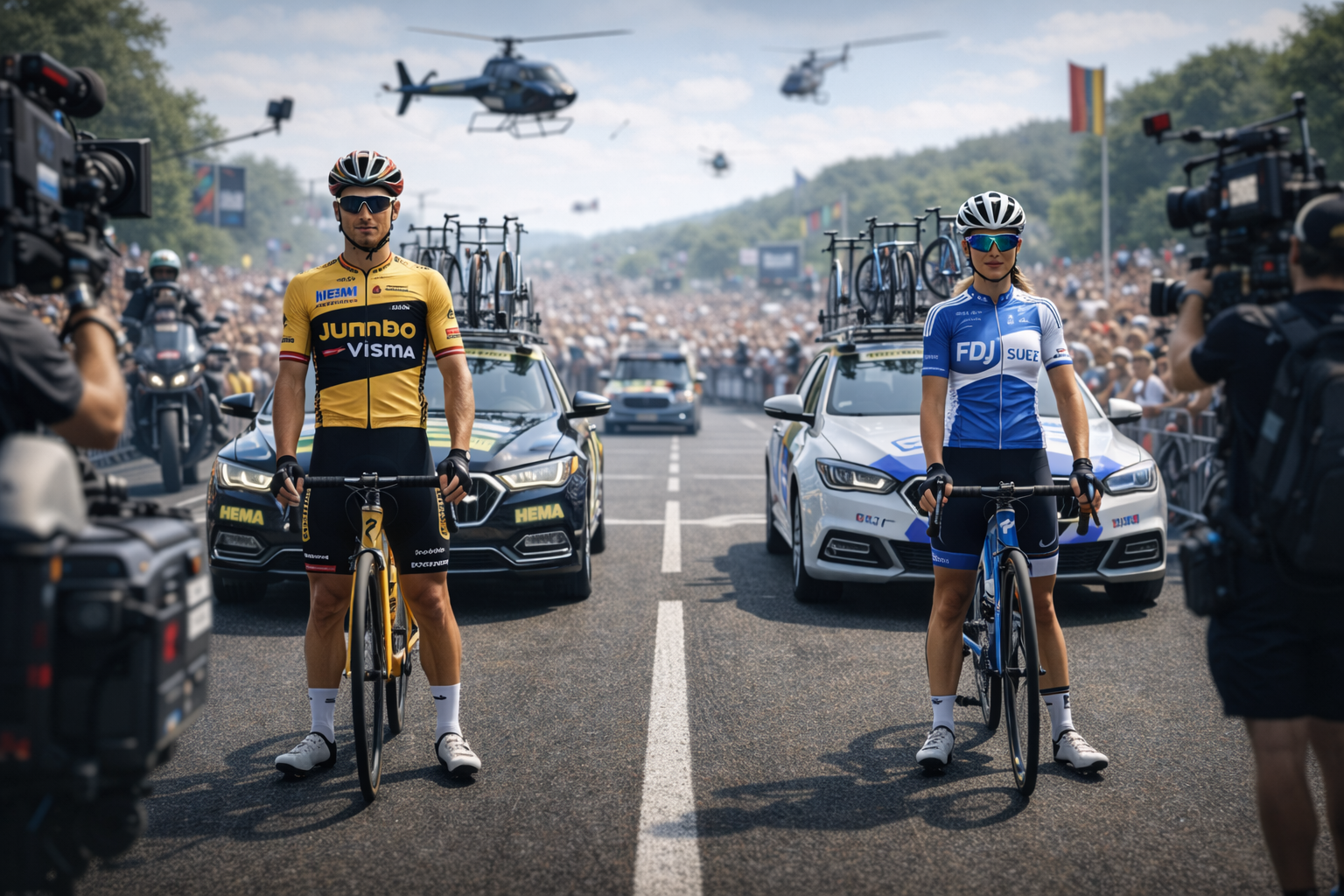

Why men pro cyclists earn more than women comes down to economics, not athletic ability. Men’s professional cycling generates larger and older commercial markets, deeper sponsorship investment, and higher team budgets. Women’s cycling has grown rapidly since 2020, especially with the rise of the Tour de France Femmes. However, team revenues, media-rights structures, and historical compounding still produce a significant salary gap. This article explains the real financial mechanics behind the difference and what is changing.
Direct answer:
Men’s pro cyclists earn more because men’s cycling delivers larger long-established audiences and sponsorship value, and cycling teams rely almost entirely on sponsor-funded budgets rather than shared media-rights income. Bigger budgets create higher salaries.
Quick Facts: The Pro Cycling Pay Gap
• Men’s WorldTour team budgets exceed €600m combined, women’s WorldTour budgets remain under €100m
• Cycling teams earn income mainly from sponsorship, not TV-rights sharing
• Minimum salaries for women’s top-tier riders now reach €38,000 employed
• Lower-tier women riders often earn under €20,000 or no salary
• Prize money gaps exist but salaries depend more on team budgets
• Women’s cycling revenue is growing fast, but from a smaller base
How Pro Cycling Pays Riders
Professional cyclists earn income primarily through team salaries. Prize money provides secondary income, but wages form the core of rider earnings.
Cycling teams operate as sponsor-funded organisations. Unlike football or basketball franchises, teams do not receive guaranteed revenue from league-wide media rights. Instead, sponsors supply most team budgets. Therefore, team payroll size depends directly on sponsor investment.
Riders may be employees or self-employed contractors. Employment status affects minimum salary levels and tax costs. However, the budget ceiling ultimately determines how much a team can pay.
Because men’s teams operate with much larger budgets, they can offer higher salaries at every contract level.
Sponsorship-Driven Team Economics
Sponsorship is the engine of cycling finance.
Men’s cycling has built global commercial value for decades. The Tour de France, Giro d’Italia, and Vuelta a España deliver enormous historical brand recognition. As a result, sponsors pay more to appear in men’s racing.
Women’s cycling now attracts stronger sponsorship than ever before. However, the commercial market is newer. Many sponsors only began treating women’s cycling as a core platform after 2020. Therefore, budget growth is rapid but still catching up.
Because sponsorship funds teams directly, larger sponsor contracts in men’s cycling translate straight into higher rider pay.
Media Rights and Audience Scale
Media rights in cycling belong mainly to race organisers, not teams. Organisers sell broadcast packages. Teams do not receive shared television revenue.
This structure matters because:
• Larger TV audiences increase sponsor exposure value
• Sponsors fund teams based on audience reach
• Teams then pay riders from sponsor budgets
Men’s cycling historically achieved bigger global audiences. That history compounds sponsor confidence and spending. Women’s cycling now benefits from rapidly improving broadcast reach, but consistent calendar-wide distribution is still developing.
As women’s audience numbers rise, sponsor budgets follow. However, decades of accumulated media scale still favour men’s cycling today.
Team Budget Comparisons
The budget gap explains most salary differences.
Men’s WorldTour combined team budgets exceed €600 million. Leading men’s teams operate above €50 million per season.
Women’s WorldTour combined budgets are estimated below €100 million, even after recent growth.
With payroll typically representing a large share of team expenditure, men’s teams simply have more money available to distribute in rider salaries.
Until total women’s team budgets rise closer to men’s levels, salary parity remains structurally impossible.
Minimum Salary Frameworks in Women’s Cycling
One of the most important recent developments is the introduction of minimum salaries.
Women’s WorldTour minimum salaries now reach:
• €38,000 for employed riders
• Higher levels for self-employed contracts
Women’s ProTeam minimum salaries now exist as well, typically around €20,000.
These rules did not exist before 2020. Their introduction marks a major professionalisation step. However, minimums only set the floor. Maximum salaries still depend on team budgets.
Men’s minimum salaries were established much earlier. Their salary ceilings have also grown for decades. Women’s cycling is now building similar structures, but later in the commercial timeline.
Prize Money Differences
Prize money highlights the commercial scale difference but does not drive salaries directly.
For example:
• Men’s Tour de France winner earns €500,000
• Tour de France Femmes winner earns €50,000
Total prize pools show similar 10x differences. However, teams distribute prize money internally, and wages remain the primary income source.
Prize money gaps signal event commercial value. They also influence sponsor confidence. But team salary budgets matter far more than prize cheques.
Cost Structures and Event Economics
Organising cycling races is expensive.
Broadcast production, road closures, security, logistics, and staff all carry high costs. Men’s events historically recovered these costs through mature sponsorship and media markets. Women’s events are now achieving similar exposure but still scale operations carefully to ensure sustainability.
As organiser revenues grow, investment in women’s race production increases. That improves the product, grows audiences, and strengthens sponsor value — feeding future salary growth.
Labour Market and Pipeline Challenges
The salary gap is also influenced by labour market dynamics.
At top-tier women’s levels, salaries are now professional. However, lower-tier riders often:
• Earn under €20,000
• Receive no salary
• Hold second jobs
This weak pipeline reduces long-term bargaining power. Talented riders may exit before reaching elite level. A stronger middle tier will eventually support higher top-tier salaries by expanding the professional talent pool.
Men’s cycling solved this pipeline decades ago. Women’s cycling is building it now.
Historical Compounding Effects
Men’s cycling has benefited from more than 100 years of commercial development. Sponsor relationships, media habits, and global brand value compounded over generations.
Women’s cycling experienced interrupted calendars, unstable sponsorship, and limited coverage for much of its history. The modern growth phase began only recently.
This time gap — not athlete performance — explains much of today’s pay difference.
What Has Changed Since 2020
The last five years transformed women’s cycling economics.
• Introduction of minimum salary rules
• Launch of the modern Tour de France Femmes
• Rapid broadcast expansion
• Long-term sponsorship commitments
• Stronger team infrastructure
• Growing global fan engagement
These changes created real professional career pathways. They also laid the foundation for continued salary growth.
What Could Close the Pay Gap Faster
High Impact
• Broader global broadcast distribution across the full women’s calendar
• Continued long-term sponsor investment
• Expansion of mid-tier team funding
Medium Impact
• Revenue-sharing reforms between organisers and teams
• Higher minimum salaries at lower tiers
Lower Impact Alone
• Prize money equalisation without broader revenue growth
The key driver remains simple: larger stable revenues produce larger stable salaries.
The Direction of Travel
Women’s professional cycling is scaling fast. Media coverage improves each season. Sponsor confidence strengthens. Team budgets rise. Salary floors increase. Competition deepens.
Men’s pro cyclists earn more today because their commercial ecosystem matured earlier. Women’s cycling is now following the same economic trajectory — just several decades later.
The pay gap is real. The growth trend is also real. The direction is clear.
Frequently Asked Questions
Why do men pro cyclists earn more than women?
Men’s cycling has larger commercial markets, higher sponsorship budgets, and longer-established media audiences. Because teams rely on sponsor funding, bigger budgets lead directly to higher salaries.
Do cycling teams earn TV-rights money?
No. Race organisers sell broadcast rights. Teams earn money mainly through sponsorship, not shared media-rights income.
Are women’s cycling salaries improving?
Yes. Minimum salaries now exist for top-tier women riders, and team budgets continue to grow. However, lower tiers still face financial pressure.
Is prize money the main reason for the pay gap?
No. Prize money reflects commercial scale but rider salaries depend more on team budgets and sponsorship.
Will the pay gap close in the future?
If broadcast reach, sponsorship, and team funding continue growing in women’s cycling, salary parity will improve over time.